In this high-level guide we’ll walk you through the basics of whole-house humidifiers. How they help with low humidity, the different types of humidifiers, required maintenance for each, and the many benefits of adding a humidifier to home!
Why Indoor Humidity Level Matters
If you’re here, there’s a good chance you’re dealing with low humidity levels in your home.
This usually happens in the winter because cold air holds very little moisture. When your furnace or heat pump warms that air, it makes it feel drier. When this happens your house can start to feel like a desert and you may experience uncomfortable symptoms like dry skin, chapped lips, irritated sinuses and nosebleeds, and an annoying amount of static electricity.
Not only is low indoor humidity extremely uncomfortable, but it can also do real damage to your home. Below 25% is where we usually start seeing real problems, but the exact numbers really depend on whether you have wood floors or musical instruments. Learn more about what numbers are considered high and low humidity here.
Fixing the humidity levels in your home can make major improvements to the condition of your home and to your family’s comfort, sleep, and health.
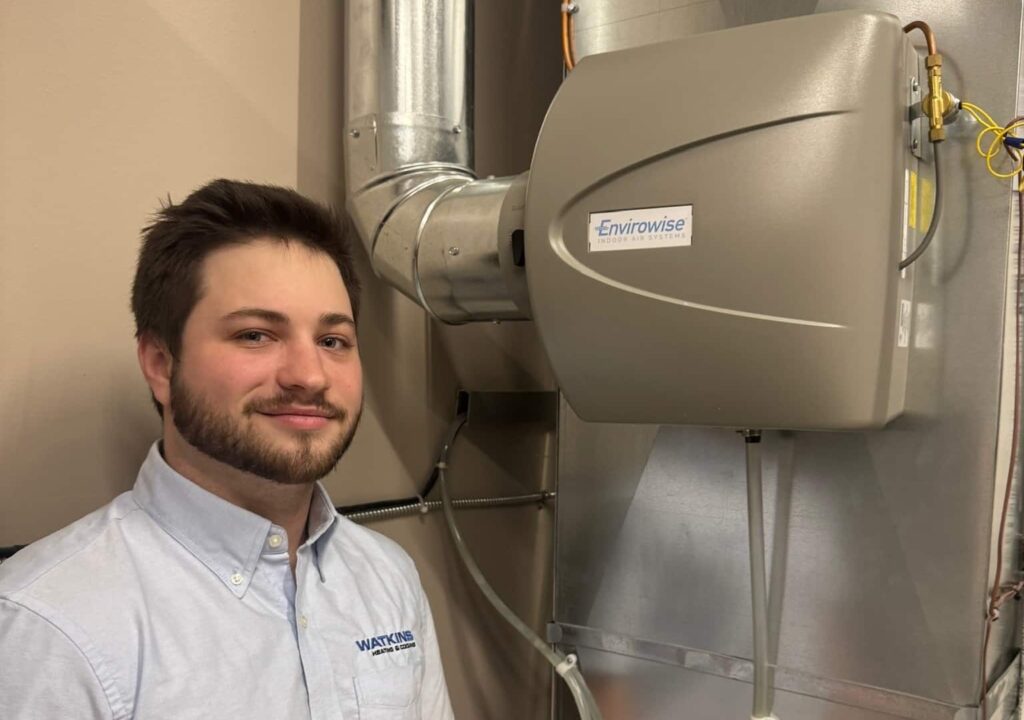
What Is a Whole-House Humidifier?
A whole-house humidifier is a furnace accessory that mounts directly onto your ductwork and adds moisture to the air every time your HVAC system runs. The goal of a whole-home humidifier is to add water to your dry indoor air till it reaches a more comfortable, healthy humidity level.
You can learn about the ideal indoor humidity level here.
Whole-house units connect to your existing ductwork to distribute the moist air evenly throughout your entire home. They also connect directly to your home’s water line to create the moisture, so there’s no tank to refill. AprilAire is often synonymous with the whole-house humidifier as their company manufactures the majority of units for furnace brands.
You’re able to control them through a wall-mounted humidistat or your smart thermostat that reads your house’s indoor humidity and shuts off automatically when the target is reached. Many models also factor in outdoor temperature to prevent window condensation when it’s very cold outside.
Whole-House Humidifiers vs. Portable Humidifiers
Whole-house and portable humidifiers both help with dry indoor air, but they do so in very different ways.
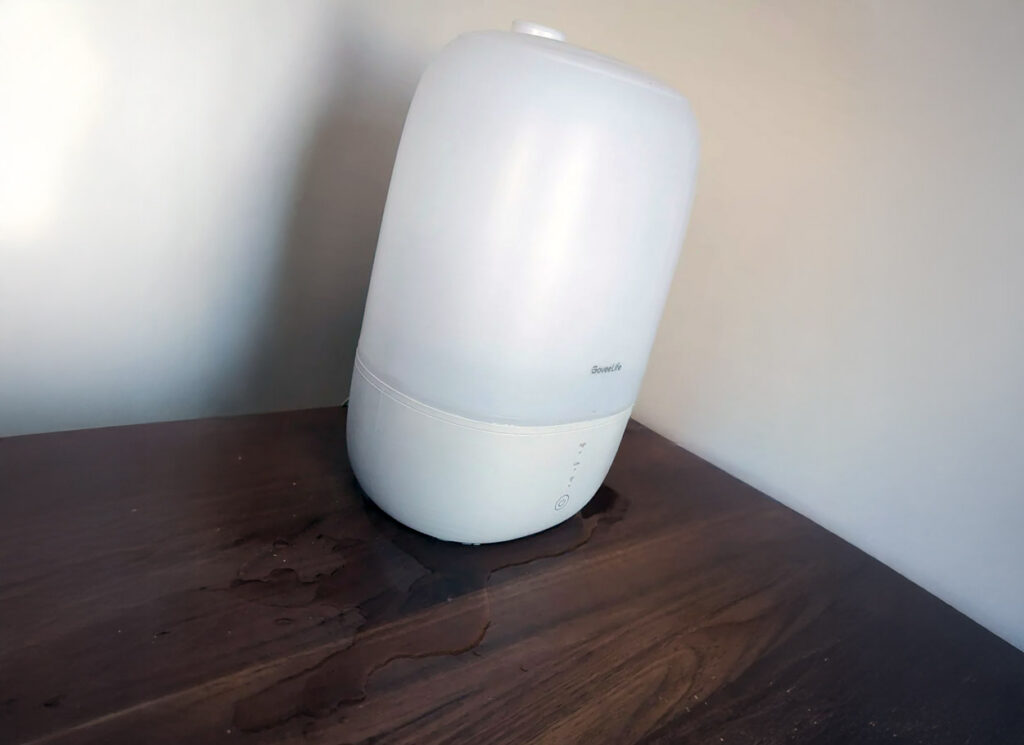
Portable humidifiers are great for a small area like a bedroom that needs more moisture in the winter (especially when someone is sick or has breathing issues), but not much beyond that. Portable units are built to sit on the ground in a room and only affect the nearby space, while a whole-house unit is built to treat every room in your place at once.
Most evaporative whole-house units can put out up to 18 gallons of moisture per day – enough for a 3,000 sq ft home. To equal that amount of power, you’d need something like 10 portable units across a bunch of separate rooms, and you’d have to refill them with water twice a day!
To create moisture, all portable models need to be filled with water whenever they run out. The mist this creates can leave surfaces in your home wet and dusted with minerals if you use tap water. Since whole-home humidifiers automatically draw moisture from your water line and disperse it through evaporation, they never need to be filled and don’t leave any puddles around your house.
Types of Whole-House Humidifiers
There are a few different kinds of whole-house humidifiers, and none of them are necessarily better or worse than the other. At Watkins, we install all three regularly, with each option fitting different homes and HVAC systems.
Bypass Humidifiers (Flow-Through)
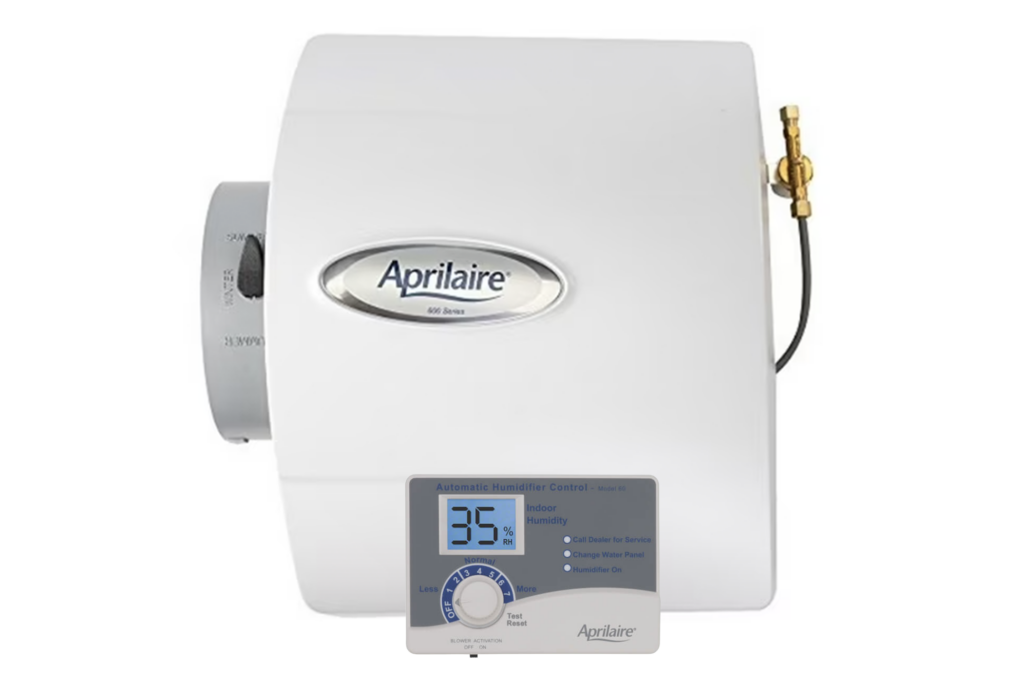
Bypass humidifiers, also known as flow-through, are the most common type of evaporative humidifiers. The AprilAire 600 is the most common bypass model we install at Watkins and the go-to choice for most homeowners, while the AprilAire 500 series is similar but with less output for smaller homes.
With a bypass humidifier, warm air from your furnace is pushed through an additional bypass duct by the furnace fan. That air passes over a water-soaked evaporator pad, picks up the moisture, and then returns to the air stream. Because a bypass humidifier uses furnace heat to evaporate the water and the furnace fan to circulate it, the system has very few moving parts, and is usually the most affordable option.
If you have a forced-air furnace and a decent amount of space around the ductwork, bypass humidifiers are usually the simplest and best option.
Fan-Powered Humidifiers
Fan-powered humidifiers are evaporative humidifiers just like the bypass, but they use their own fan. We install these models when we don’t have the space to run a bypass duct from the supply to the return. The AprilAire 720 is our most recommended fan-powered model.
Instead of relying on a bypass duct and furnace fan, they have a small built-in fan that pushes air across the pad and back into the ductwork. They still use the furnace to heat and evaporate the water.
Fan-powered humidifiers are commonly used with HVAC systems installed in tight closets or on slab homes. They deliver the same output as bypass humidifiers, but with a couple extra components (making them a bit more expensive and complicated).
Steam Humidifiers
Steam humidifiers do a lot more of the work themselves. These units use electricity to boil water into steam and then pump it directly into the ductwork through a dispersion tube. We typically install these humidifiers for large homes that require more than 18 gallons a day. The AprilAire 800 is a popular whole-house steam model (and the best in our opinion).
Homes with a heat pump / air handler combo may need a humidifier that can create the evaporation on its own, since a heat pump doesn’t create heat the same way a furnace does. Whole-house steam humidifiers are also great for large homes that want more performance, because these units have the highest and fastest output of moisture.
The overall cost of a steam humidifier is generally higher as they cost more upfront, need their own electrical circuit and generally need more maintenance.
Quick Overview of AprilAire Whole-House Models
AprilAire 500 Series – Bypass model for smaller homes with a gas furnace and enough ductwork space for a bypass setup.
AprilAire 600 Series – Most common bypass model for average-sized homes with a gas furnace and plenty of ductwork space.
AprilAire 700 Series – Fan-powered humidifier for homes that do not have the space for bypass ductwork.
AprilAire 800 Series – Steam humidifier for larger homes that need higher humidity output or homes with heat pump systems.
You’ll also notice some models end in “M,” like the AprilAire 500M. The “M” stands for manual control, which means the humidifier uses a manual humidistat. Models without the “M” use a built-in automatic digital humidistat that can adjust humidity based on outdoor temperature. When we pair a humidifier with a smart thermostat, we often use the manual version.
For the full list of AprilAire whole-house humidifiers, visit their page here: aprilaire.com/whole-house-products/humidifier
Humidifier Energy and Water Usage
Most people are surprised by how little energy and water a whole-house humidifier actually uses.
Whole home bypass models use the least resources. They generally don’t use ANY extra electricity because they just operate on the electricity from your furnace fan when it’s already running in the winter! On dry, winter days it may use around 6-12 gallons per day.
Fan-powered whole house units use slightly more electricity because of the small built-in fan, but they only use a tiny amount of electric per day in the winter, and the water consumption is essentially the same as bypass.
Full-house steam humidifiers use a bit more electricity since they have to boil and evaporate the water themselves. They still use around the same amount of water as the others which is based on how much moisture the home needs. But during dry days, steam humidifiers can use around 5–20kWh of electricity per day.
That may sound like a lot, but it’s still far less than running multiple portable units around your house. The big energy payoff is that the higher humidity in the winter actually makes your home feel warmer. This allows you to set your thermostat a little lower and still feel comfortable, which can help lower your heating bills.
Humidifier Maintenance Requirements
Maintenance is one of the best parts of going with a whole-house humidifier.
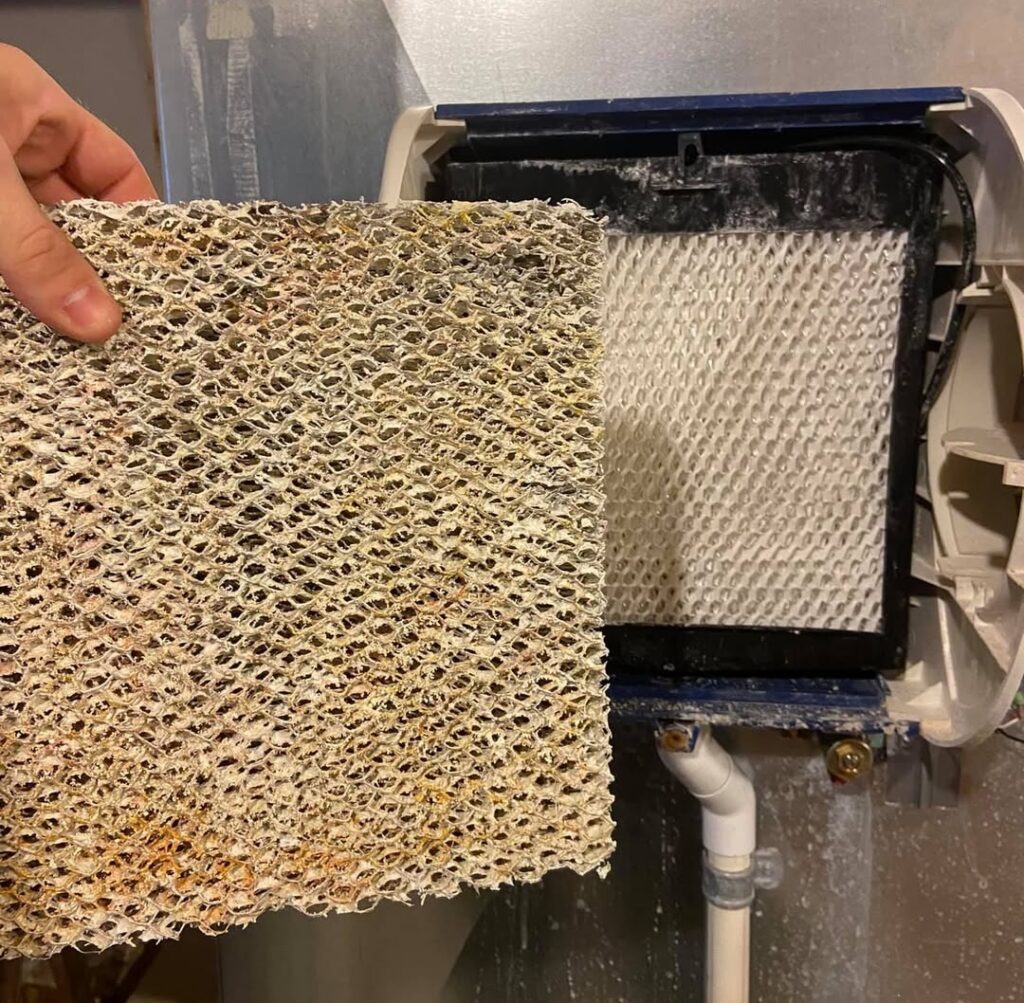
With bypass and fan-powered models (the most common types we install), the only real maintenance you need to do is replace the evaporator pad about once per year. We recommend doing this in the fall before it starts getting cold. This only takes about 15 minutes: shut off the water, pull out the old pad, rinse the plastic frame, slide in the new pad, and turn the water back on. If you have very hard water, you’ll probably see mineral buildup on the pad. If you have a water softener, residual salt in the water can break down the pad and shorten its life too.
Steam humidifiers need a bit more upkeep, but still nothing major. You’ll need to replace the canister once a year, but AprilAire makes this pretty easy with a twist-off design that takes about 10 minutes. These models also have a built-in cleaning cycle that you’ll need to run every once in a while when prompted to flush out scale.
But compared to the portable humidifier’s constant tank refills, deep cleaning and wiping off minerals and water from your floors, a whole-house unit is basically set it and forget it.
Benefits of Using a Humidifier in Your Home
Using a humidifier in your home to get rid of dry air can make a major difference in quality of life in your house. You can read more about the benefits of ideal humidity in your home here.
When you get your humidity up above 30 or 35% during winter, you should instantly notice things like:
- Softer skin and lips
- Clearer sinuses
- No more static shocks
- Happier houseplants
While most of these are comfort things, you may also find some big improvements in your health. Proper sinus moisture is your body’s front line defense against viruses. A humidifier may mean fewer colds making the rounds in your family. It can also help decrease nosebleeds.
Another one that surprises people is what humidifiers do for wood furnishings. Dry air pulls the moisture out of hardwood floors, cabinets, and furniture which can cause damage like cracking and splitting. If you have any musical instruments in your house like pianos and guitars, you’ll also find that they stay in tune instead of going sharp or flat from the shrinking wood! Around 40–50% humidity, that wood will stay in shape for years longer.
Risks of Over-Humidification
While this article is all about getting your humidity higher and above that dry danger zone below 30% in the winter, there are some problems with getting it TOO high. Learn more about what numbers are considered too high here.
Some problems you’ll find with over-humidification in the winter:
- Condensation on windows (especially single-pane)
- Musty smells or mold in corners/closets
- Sticky feeling in the house
- Dust mites thriving
We discussed how low humidity can cause cracking in wooden furniture, but high levels can also cause damage like warping.
The good news is that modern whole-house humidifiers have digital controls built in that help keep humidity levels balanced no matter the season. For example, most new AprilAire models automatically lower the setpoint as outdoor temperatures drop and window surface temperatures change. This keeps the dew point below the window surface temperature so you avoid condensation issues.
Ready for Better Indoor Comfort? Let Watkins Help
If dry winter air is making your home uncomfortable, a full-house humidifier is your best move. At Watkins, we install AprilAire and Trane (made by AprilAire) units because they’re reliable, low-maintenance, and work with any HVAC system.
Not sure which one is right for your home? Give our experts a call at 937-748-0220 or schedule a free consultation. We’ll help you choose the perfect humidifier for your home and keep your family comfortable!
FAQs
Q: What humidity level should I set in winter?
A: Aim for 35–45% during the winter. Modern whole-house humidifiers have digital controls that handle the adjustments automatically with outdoor compensation.
Can I add one to any furnace?
A: Yes, almost always. Bypass and fan-powered humidifiers work with gas furnaces and electric air handlers. Steam models are typically best for heat pump systems.
Do they cause mold?
A: If humidity gets too high above 55–60% for a long time, it can cause mold, but whole-home humidifiers have digital controls that keep them in the right zone.
How long do they last?
A: Humidifiers typically last about 15 years, with higher numbers for units that are serviced and have their evaporative pads and steam canisters changed out regularly.
Do they work with heat pumps?
A: Yes, steam humidifiers are the most popular pairing with heat pumps because they don’t rely on furnace heat. Bypass models can work too if run in “fan-only” mode.
Can they run without the furnace running?
A: Sort of. There are some whole-house models that can humidify without a furnace in heating mode, but they still need the fan to be turned on for the air to circulate through your ducts.
Other Recent Blog Posts
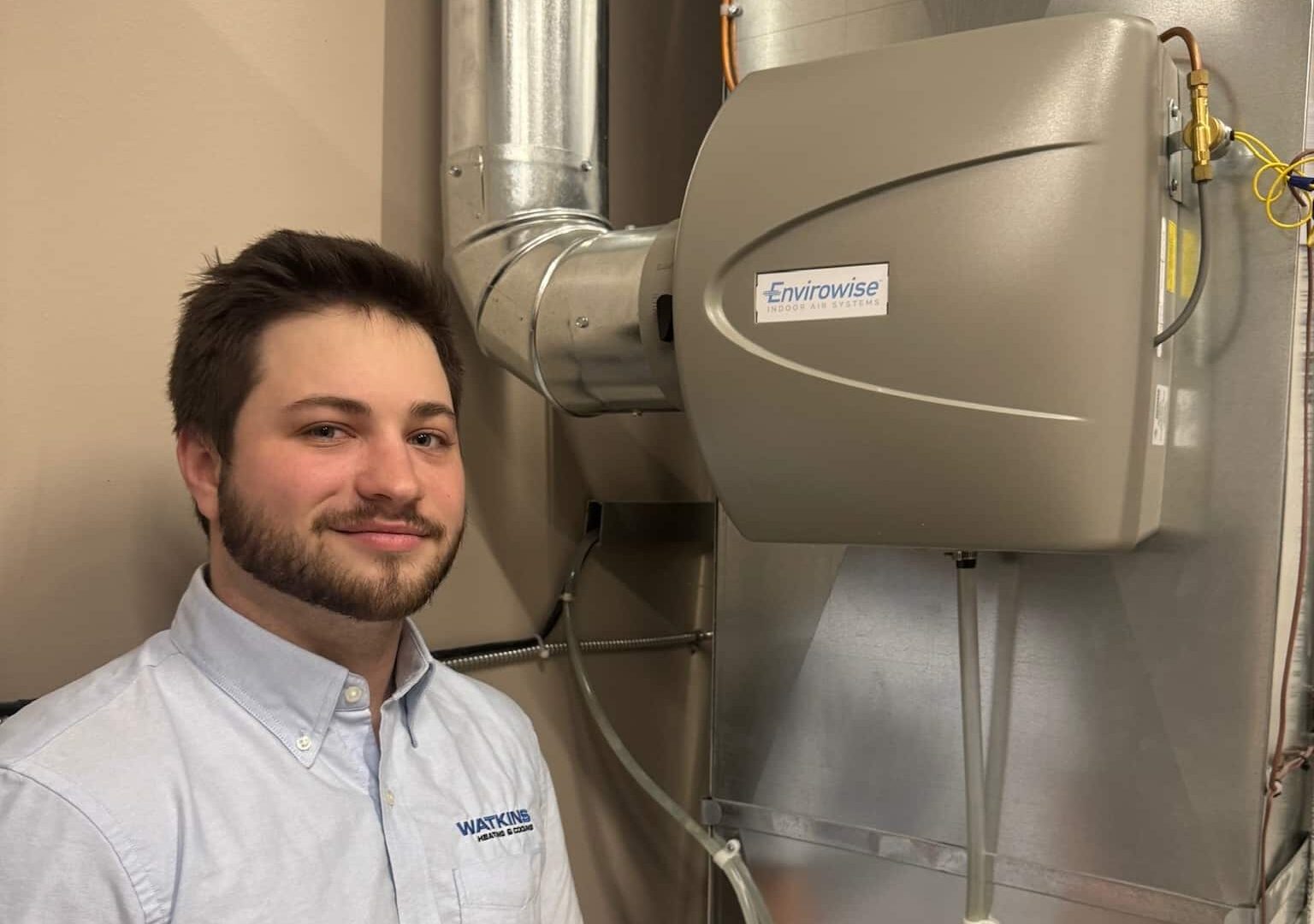
Guide to Whole House Humidifiers
Cracked Heat Exchangers: Symptoms, Causes, and How to Spot a Scam
10 HVAC Tips for Winter and Summer
Watkins’ Ongoing HVAC Training: How Our Technicians Became Ohio’s Best

The Federal HVAC Tax Credit Ended in 2025. What It Means for Homeowners in 2026
Heat Pump Efficiency Charts: Understanding Performance & Savings

HSPF vs HSPF2: Your Update on Heat Pump Efficiency Standards

SEER to SEER2 Conversion: Understanding the 2026 Air Conditioner Efficiency Standard
Central AC Not Blowing Cold Air? Here’s Why and How to Fix It
High-Efficiency Gas Furnaces: Your Guide to AFUE Ratings & Lower Heating Bills
Thermostat Not Working? What to Check BEFORE Replacing Your Thermostat

How Does a Heat Pump Work? A Look Inside the Heat Pump System
Heat Pump AC Combo: What’s the Best Heating & Cooling Setup for Your Home?
R32 and R454b Refrigerant: The New Air Conditioner Refrigerants
When to Use Emergency Heat
What Is Considered High Humidity and Low Humidity In Your Home
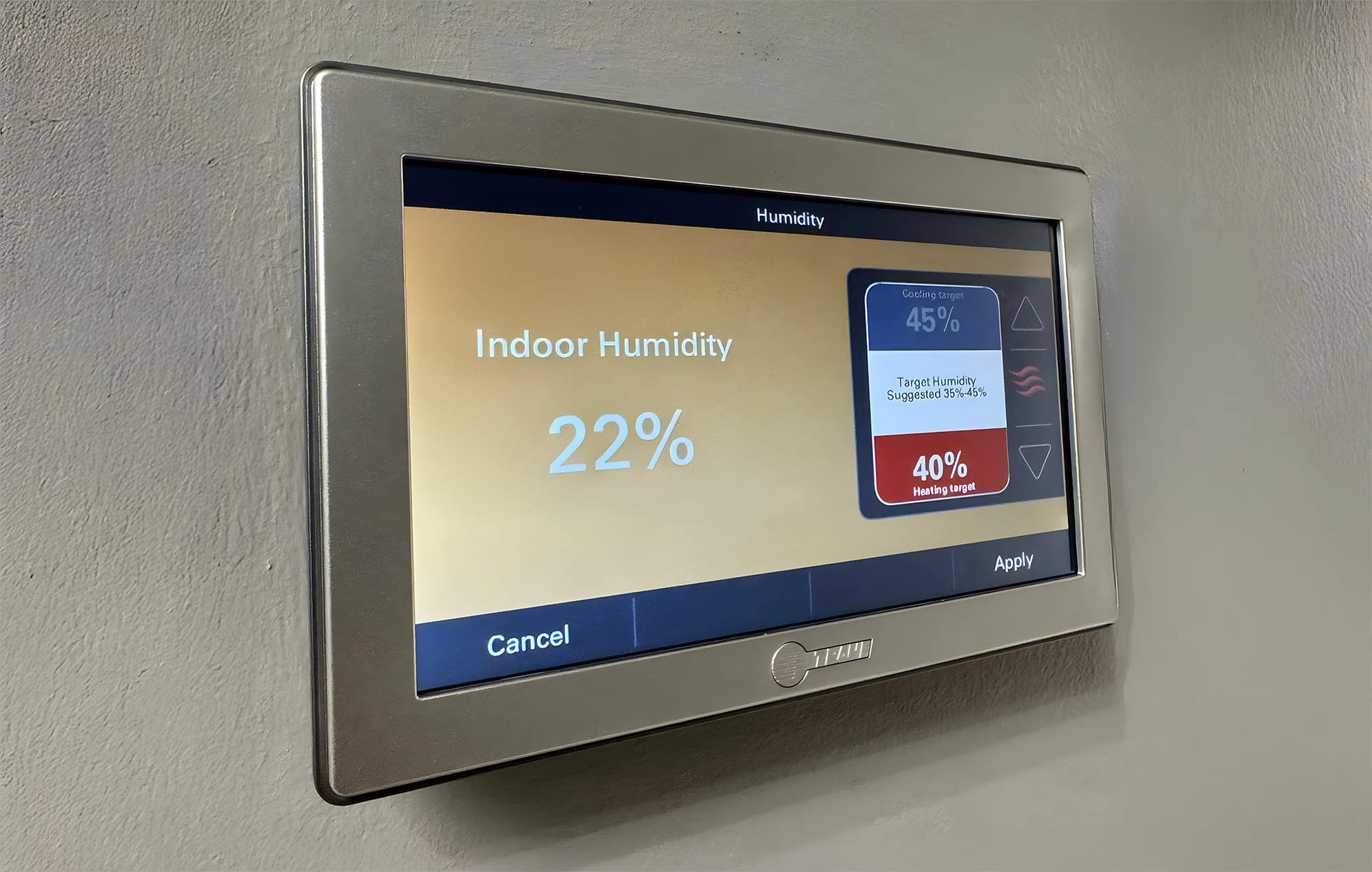
Ideal Indoor Humidity Levels and the Benefits of Optimum Humidity
Nitrogen Brazing vs Soldering for Refrigerant Lines

Overview of Furnace and Air Conditioner Brands: An HVAC Company Family Tree
Air Conditioner Coil Cleaning: Improve Efficiency & Save Money
Heat Pump Defrost Cycle: Understanding the Process and Trane’s Innovative Approach
Heat Pump vs Air Conditioner: Which HVAC System is Right for You?
Difference Between Trane XV20i and XV18 Heat Pump and Air Conditioner
What Causes Carbon Monoxide in Homes

Recognizing the Signs and Symptoms of Carbon Monoxide Poisoning

Watkins Heating and Cooling Wins the 2024 Trane SOAR Award

Understanding Air Conditioner Lightning Strikes

LoveServes in Guatemala
How to Prevent A/C Evaporator Coil From Leaking Freon
What Causes Refrigerant Leaks in Air Conditioners

What Is Refrigerant Used in Home A/C Units?
Trane Aluminum Spine Fin Coils – Pros and Cons

Can I Replace Just My Air Conditioner Without Replacing My Furnace?

Understanding the TXV

Top 10 Most Common HVAC Issues and How to Prevent Them
Discovering Heat Pumps: Your Guide to Energy-Efficient Home Comfort

Air Conditioner Covers

Teaching, Building, and Changing Lives in the Dominican Republic
Factory Warranties

Introduction to Our Work in St. Vincent
Air conditioner maintenance | Water leaks

Zoning for Solar Energy

We’re Hiring!
It Is Cold Upstairs! Comfort Tips for a Two-Story Home.

REAL Service Technicians

Watkins’ Mission to Transform Lives in the Dominican Republic

Top 5 Reasons for a Furnace Tune-up

How Do You choose an HVAC Contractor?
Carbon Monoxide Safety
6 Furnace Air Filter Tips
Routine furnace maintenance saves money

Committed to Your Comfort: Trane Heat Pump Repairs Done Right